
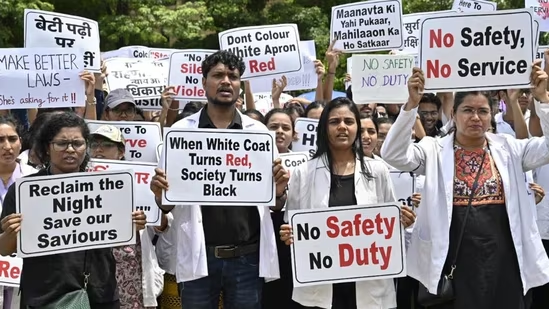
The Kolkata rape and murder case, which has gripped the nation with its shocking brutality, has taken unexpected turns as new details emerge from the investigation. The case involves the tragic death of a young woman, allegedly at the hands of an accused named Sanjay Roy, whose actions have drawn widespread condemnation and calls for justice. However, recent developments have added layers of complexity to the narrative, raising questions about the nature of the crime and the path to justice.
No Mention of Gang Rape in Kolkata Rape and Murder Case
One of the most significant developments in the case is the absence of any mention of gang rape in the Central Bureau of Investigation’s (CBI) official remand note for Sanjay Roy. This omission is striking, particularly when earlier reports hinted at the involvement of multiple perpetrators. The initial narrative, fuelled by media reports and public outrage, painted a picture of a heinous gang rape and murder, a story that quickly spread across social media and news platforms.
The CBI’s decision not to include gang rape in their note could indicate a shift in the investigation’s focus. It suggests that the agency is either not convinced of the involvement of others or lacks concrete evidence to support such a claim, since their report also states the crime scene was heavily tampered with before they took over the investigation. This change in direction could have significant implications for how the case is prosecuted and how the public perceives the pursuit of justice in this tragic incident.
Solitary Confinement: Protection or Isolation?
Another critical decision by the authorities has been to place Sanjay Roy in solitary confinement. This move underscores the sensitivity of the case and the high-profile nature of the investigation. Solitary confinement is often used to protect inmates from potential harm by other prisoners, especially in cases that attract significant media attention and public outrage.
However, the decision to isolate Roy could also be interpreted as a measure to prevent him from influencing the investigation or communicating with potential accomplices. By keeping Roy away from the general prison population, authorities can ensure that he does not engage in activities that could obstruct the investigation. This approach reflects the authorities’ commitment to maintaining the integrity of the investigation and securing a fair trial.
Polygraph Test: A Quest for Truth
In a further development, the court has approved the use of a polygraph test on Sanjay Roy. This decision came after Roy claimed that he was being framed, a statement that, if taken at face value, would add another layer of complexity to an already convoluted case. The approval of the polygraph test indicates that investigators are leaving no stone unturned in their quest for the truth.
Polygraph tests, commonly known as lie detector tests, are used to measure physiological responses that may indicate whether a person is telling the truth. While the results of such tests are not always admissible in court, they can provide valuable leads and help investigators gauge the credibility of a suspect’s statements. In Roy’s case, the polygraph test could either bolster his claims of being framed or expose inconsistencies in his account, thereby aiding the investigation.
The Kolkata rape and murder case is not just another criminal investigation; it is a reflection of the broader societal issues that continue to plague India. Incidents of sexual violence and the subsequent handling of such cases by law enforcement and the judiciary have long been contentious issues in the country. Public outcry over such cases often highlights the need for swift and decisive action to bring perpetrators to justice and to reassure the public that the safety and dignity of women are paramount.
The absence of gang rape charges, the use of solitary confinement, and the approval of a polygraph test in this case suggest a methodical and cautious approach by the CBI. The agency appears to be taking steps to ensure that the investigation is thorough and that all angles are explored before reaching any conclusions. This approach is crucial in a case that has captured national attention and where the demand for justice is both loud and insistent.
The focus on Sanjay Roy as the prime suspect raises questions about the broader implications of the case. If Roy is indeed guilty, then the swift and decisive actions of the authorities will be seen as a victory for justice. However, if his claims of being framed have any merit, it could expose deeper issues within the investigative process and raise concerns about the reliability of initial reports and the treatment of suspects in high-profile cases.
As the investigation continues, the eyes of the nation remain fixed on how the case unfolds. The CBI’s actions and the judicial proceedings will be closely watched, not only by those seeking justice for the victim but also by those concerned about the integrity of the legal system. The decisions made in the coming days and weeks will have far-reaching consequences, both for the individuals involved and for the broader societal context in which such crimes occur.
The Kolkata rape and murder case serves as a stark reminder of the challenges faced by law enforcement in dealing with crimes of such a heinous nature. It also highlights the importance of a balanced approach that respects the rights of the accused while ensuring that justice is served. As the investigation progresses, it will be essential for the authorities to maintain transparency and accountability, ensuring that the truth is uncovered and that justice, in its truest sense, is achieved.
In the end, the hope is that the outcome of this case will not only bring justice for the victim and her family but also contribute to a broader conversation about how India addresses and prevents such crimes in the future. The Kolkata case is more than just a legal battle; it is a test of the nation’s commitment to justice, safety, and the rule of law.
Read more: SC deploys CISF at RG Kar Hospital