In the ever-evolving arena of global politics, the tide has recently turned in favour of right-wing ideology, with the Bharatiya Janata Party (BJP) leading the charge in India. This piece delves into the resurgence of conservative politics, taking a close look at the dynamics propelling this ideological pivot. Without assigning value, we aim to dissect the causes behind this shift and its potential impact on the interconnected world stage, with a particular emphasis on the BJP’s rising prominence.
In recent years, the world has witnessed a significant shift in the political landscape, with right-wing politics gaining prominence in numerous countries. This trend marks a notable departure from the decades-long dominance of left-wing ideologies and has far-reaching implications, especially in countries like India, where the national assembly elections of 2024 are on the horizon. This essay aims to delve into this global phenomenon, with a particular focus on its manifestation in India.
Historical Context of Global Political Shifts
The global political landscape has been shaped by a myriad of historical events and ideologies, often swinging like a pendulum between the left and the right. In the 20th century, the aftermath of World War I and II, the Great Depression, and the Cold War played significant roles in shaping political ideologies. Post-WWII, the world witnessed the rise of socialist and communist ideologies, particularly in Eastern Europe, Asia, and parts of Latin America. This was a reaction to the failures of capitalist systems and colonialism, as well as a response to the growing demands for social justice, labour rights, and economic equality.
The latter half of the 20th century, however, began to see the cracks in communist and socialist regimes. The fall of the Berlin Wall in 1989 and the subsequent collapse of the Soviet Union were pivotal moments, signalling a major setback for left-wing ideologies. These events coincided with the rise of neoliberal economic policies in the West, championed by figures like Ronald Reagan in the United States and Margaret Thatcher in the United Kingdom. These policies emphasised deregulation, privatisation, and a reduction in the role of the state in the economy.
Entering the 21st century, the effects of globalisation, the 2008 financial crisis, and growing concerns over immigration and national identity further influenced the political discourse. The economic downturn led to widespread dissatisfaction with the status quo, fuelling a sense of betrayal among the working and middle classes, who felt left behind by the globalised economy. This discontent was fertile ground for right-wing ideologies, which began to gain traction by promising a return to hyper-nationalism, economic prosperity, and social stability.
Rise of Right-Wing Politics Globally
The resurgence of right-wing politics in the global arena is a multifaceted phenomenon, influenced by economic, social, and cultural factors. One of the primary drivers has been the global economic landscape. The 2008 financial crisis was a watershed moment, leading to widespread disillusionment with neoliberal economic policies. Many began to view these policies as favouring the elite at the expense of the working and middle classes. In response, right-wing parties and leaders capitalised on this sentiment, advocating for protectionist economic policies, and criticising global trade agreements.
Another significant factor has been the issue of immigration and national identity. In Europe and the United States, the influx of immigrants and refugees, particularly from war-torn regions in West Asia and Africa, led to a cultural backlash. Right-wing parties used this as an opportunity to promote a narrative of national identity under threat (and in some cases they were), advocating for stricter immigration policies and border controls.
The rise of digital media and social networks has also played a critical role in the spread of right-wing ideologies. These platforms have allowed for the rapid dissemination of information, often unfiltered and unverified, which has been instrumental in mobilising support for right-wing causes. It was a leaf carefully taken out of the left-wingers’ handbook or tool kit, since that’s what the cool kids call it these days. Nevertheless, the use of social media for political campaigning has enabled right-wing parties to reach a wider audience, particularly the younger generation.
Focus on India: Right-Wing Surge Under the BJP
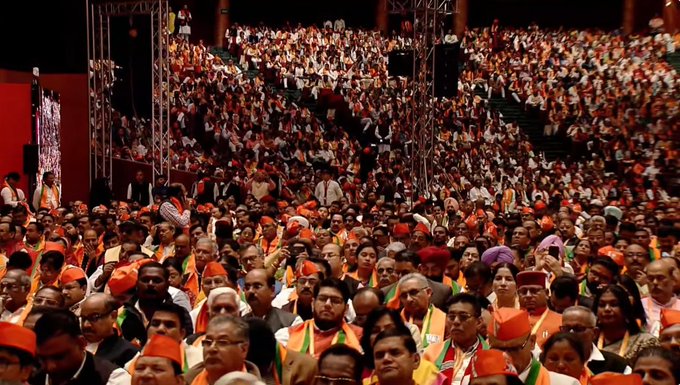
In India, the political landscape has been undergoing a significant transformation, marked by the rise of right-wing politics. The Bharatiya Janata Party (BJP), under the leadership of Narendra Modi, has been at the forefront of this shift. The BJP’s rise can be traced back to the liberalisation of the Indian economy in the 1990s, which created a new middle class that became a key constituency for the party. The party has skilfully combined economic development with Hindu nationalism, appealing to a broad swath of the Indian population.
The BJP’s political strategy has been marked by a focus on national security, economic development, promise of elevating global presence, and finally the promotion of Hindu culture and values. This has resonated with a significant portion of the Indian electorate, who view the party as a champion of Hindu identity and a bulwark against perceived threats to national sovereignty and cultural integrity.
The use of technology and social media has been another critical factor in the BJP’s rise. The party has effectively used these platforms to mobilise support, spread its message, and counter its opponents. The BJP’s IT cell is known for its efficiency in managing online campaigns and shaping public opinion.
Social media platforms have been used effectively by right-wing parties and leaders to mobilise support, spread their message, and sometimes propagate misinformation. This is evident in the case of the BJP in India, as well as in the strategies employed by leaders like Trump and Brazil’s Jair Bolsonaro, who have used social media as a primary tool for political communication and campaigning. The same can be said about the Congress, DMK, TMC and pretty much any party with a decent vote bank.
However, the rise of right-wing politics in India has not been without controversy. Critics argue that it has led to increased social division, particularly along religious lines. There have been concerns over the marginalisation of minority communities, the curtailment of civil liberties, and the erosion of secular principles that have been foundational to the Indian republic.
Impact of Right-Wing Politics on Indian Governance and Society
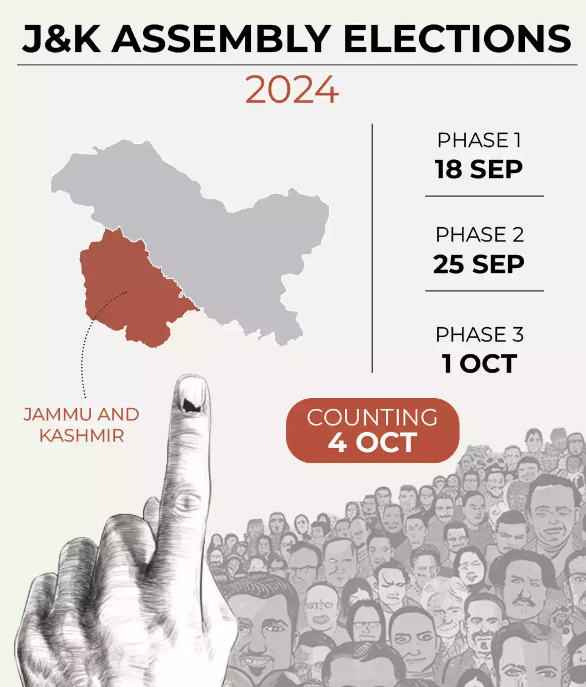
The rise of right-wing politics in India has had profound impacts on governance and societal norms. Policies have increasingly leaned towards market-driven economics and a stronger stance on national security issues. Socially, there has been a resurgence of nationalist sentiments, often intertwining with religious and cultural identities. The government’s decisions, such as the abrogation of Article 370 in Jammu and Kashmir, efforts to rebuild the Ayodhya temple, “surgical strikes”, promotion of yoga as India’s gift to the world, and even hosting the G20 summit in Delhi, all reflect this ideological shift.
Comparison with Global Trends
This political trajectory of India mirrors the global trend of right-wing resurgence. The emphasis on national sovereignty, economic reforms, and cultural identity is a pattern observed in many other countries experiencing similar political shifts. India’s journey offers a unique perspective on how global trends are adapted and manifested in different socio-political contexts. The comparison below reveals common threads and distinct nuances in how different countries have experienced this political shift.
Economic Policies and Populism:
Globally, right-wing parties have often capitalised on economic discontent. In the United States, the election of Donald Trump in 2016 was partly attributed to his promise to revive the American economy by championing protectionist policies, revitalising manufacturing, and renegotiating trade deals. Similarly, in India, the BJP’s focus on economic development, including initiatives like ‘Make in India’, has resonated with a populace seeking economic stability and growth. These policies mirror a global scepticism of globalisation and a preference for nationalistic economic approaches.
Cultural and National Identity:
A significant aspect of the right-wing narrative globally is the emphasis on national and cultural identity. In Europe, parties like France’s National Rally (formerly National Front) and Hungary’s Fidesz have gained support by advocating for the preservation of national culture and identity, often in opposition to immigration and the European Union’s perceived overreach. The BJP’s emphasis on Hindu nationalism, including the promotion of Hindi and Sanskrit, and the controversial Citizenship Amendment Act, aligns with this global trend of defining national identity in more exclusive terms.
Immigration and Border Control:
Immigration has been a rallying point for right-wing parties. The Brexit movement in the UK and the Trump administration’s policies on immigration and border control are examples of this. In India, while the issue of immigration is not as pronounced as in the West, the BJP government’s stance on illegal immigrants, particularly in the context of the National Register of Citizens (NRC) in Assam, reflects a similar concern with border control and national sovereignty.
Response to Global Challenges:
The response to global challenges like the COVID-19 pandemic has also highlighted the approach of right-wing governments. In India, the BJP’s handling of the pandemic, emphasising self-reliance (Aatmanirbhar Bharat), aligns with a global pattern where right-wing leaders have advocated for national solutions over international cooperation.
Democratic Institutions and Civil Liberties:
Concerns about the impact of right-wing politics on democratic institutions and civil liberties are evident globally. In countries like Poland and Hungary, right-wing governments have been accused of undermining judicial independence and media freedom. Similar concerns have been raised in India, with criticisms over the handling of dissent, the use of sedition laws, and the alleged erosion of autonomous institutions.
Cyclicality of Political Ideologies
The current global trend towards right-wing politics is a reminder of the cyclic nature of political ideologies. History shows that political landscapes are perpetually dynamic, often swinging between the left and the right as societies respond to their immediate circumstances and challenges. As such, the rise of right-wing politics should be seen as part of this ongoing cycle. Over time, as the public becomes disenchanted with one ideology, they tend to lean towards the opposite, seeking solutions and promises that seem to address their immediate concerns.
Future Projections: 2024 National Assembly Elections
The upcoming 2024 national assembly elections in India will be a critical test of the enduring strength of right-wing politics. Voter behaviour, influenced by the government’s performance, economic conditions, and socio-political issues, will determine the future course of the country. These elections will not only shape India’s domestic policies but also its position on the global stage.
As the world observes this shift, it’s crucial to recognize that the pendulum of political ideologies will continue to swing. In a few decades, we may witness a realignment towards the centre-left or left ideologies, as public sentiment and global circumstances change. The focus should therefore be on understanding these dynamics, acknowledging the factors driving them, and engaging in constructive dialogue to address the underlying issues.
The resurgence of right-wing politics reflects the cyclicality inherent in political trends. While it raises questions and concerns, it also offers insights into the evolving nature of societal needs and aspirations. As we look towards the future, especially with pivotal events like the 2024 national assembly elections in India, it becomes imperative to understand these trends in their broader historical and global context, recognizing the ever-changing tapestry of political ideologies.