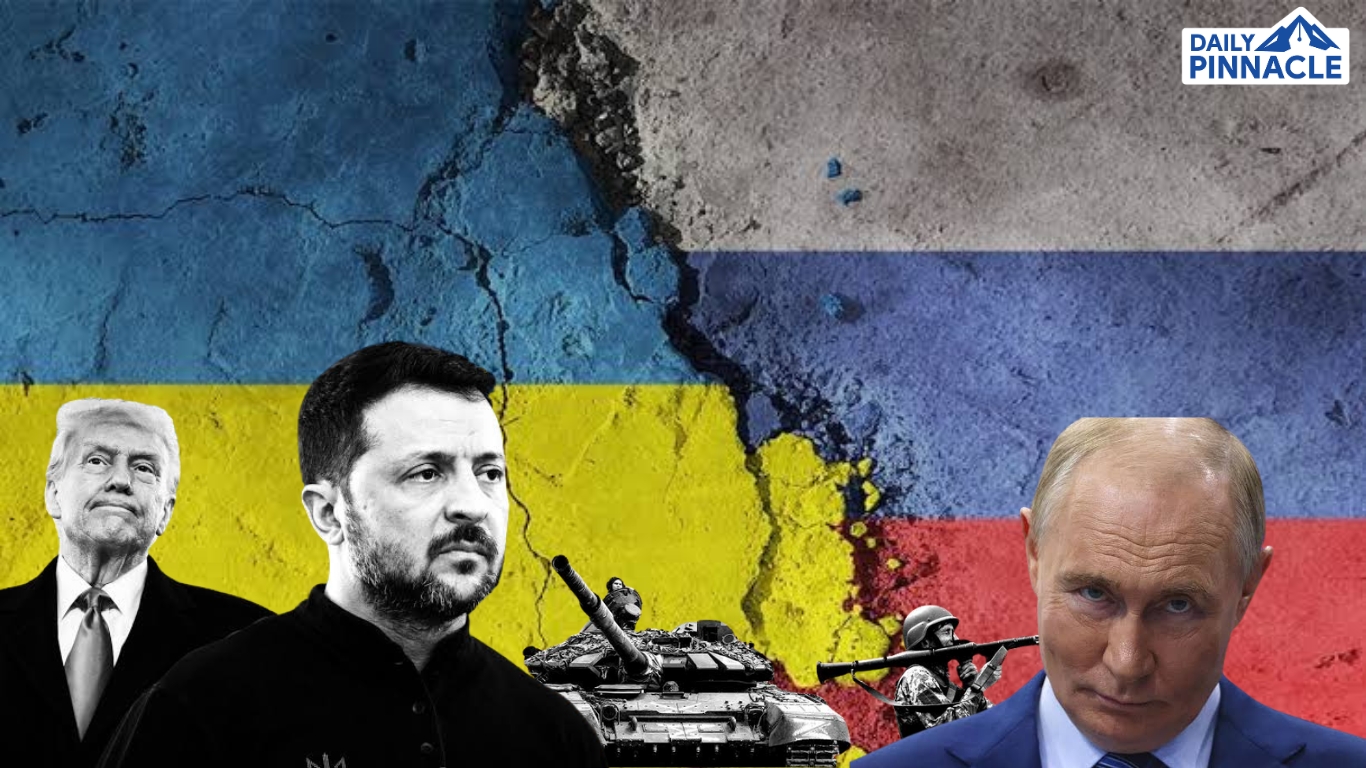
Diplomacy usually requires tact, nuance and at least a facade of unity. But when Donald Trump met with Ukrainian President Volodymyr Zelenskyy in the Oval Office, it was anything but diplomatic.
What was supposed to be a high-stakes discussion on security and critical mineral deals turned into an ugly, theatrical ambush, leaving Ukraine humiliated and the world wondering whether the U.S. had just officially abandoned its ally.
This wasn’t just a bad meeting. It was a calculated public spectacle, where Trump and his vice president, JD Vance, took turns pressuring Zelenskyy to “make a deal” with Russia or lose U.S. support entirely. Trump’s message was clear: Settle with Putin, or you’re on your own. It was a moment that signalled a fundamental shift in U.S. foreign policy, one that sided with the aggressor over the victim and left Ukraine hanging by a thread.
How Trump’s Meeting Became an Ambush
Zelenskyy travelled to Washington expecting discussions on continued U.S. military aid, economic support, and a minerals trade deal that would benefit both nations. Instead, he walked into a premeditated trap.
Trump, flanked by JD Vance, immediately set the tone by accusing Ukraine of being ungrateful. The former president dismissed Zelenskyy’s concerns about security, mocking the idea of long-term U.S. aid and demanding that Ukraine “be ready for peace”—a euphemism for capitulation to Russian aggression.
When Zelenskyy pushed back, pointing out that Russia started the war, Trump snapped. The conversation quickly escalated into a shouting match, with Vance accusing Zelenskyy of being disrespectful and Trump repeating Kremlin talking points about NATO’s expansion being the root cause of the war.
Zelenskyy was in a lose-lose situation. If he stood his ground, he risked losing U.S. support. If he conceded, he’d be seen as surrendering to Russia’s demands. The entire event looked less like a diplomatic discussion and more like a staged humiliation.
Why Trump’s Ultimatum is a Disaster for Ukraine
Trump’s words weren’t just political theatre. They undermined Ukraine’s entire position on the global stage.
For over two years, Ukraine has fought against a brutal Russian invasion, resisting despite heavy casualties and economic devastation. The U.S. has been its most critical ally, providing weapons, intelligence, and financial support. But Trump’s meeting signalled that this support is no longer guaranteed.
His “Make a deal or we’re out” statement wasn’t just an insult to Zelenskyy—it was a direct invitation for Putin to push harder. The Russian president has always gambled that Western support for Ukraine would eventually weaken. Trump just handed him confirmation on a silver platter.
Ukraine’s entire strategy has been based on holding the line until Russia is forced to negotiate on Kyiv’s terms. But if Trump withdraws U.S. backing, Ukraine’s leverage vanishes. Putin now has every reason to drag out the war, betting that America will eventually abandon Ukraine altogether.
Russia Started This War—So Why is Trump Taking Putin’s Side?
Let’s be clear: Russia invaded Ukraine.
Yes, NATO’s expansion was a concern for Moscow, and yes, Ukraine’s desire to join NATO aggravated tensions. But none of that justified a full-scale invasion, the bombing of cities, and the killing of thousands of civilians. Ukraine had every right to decide its own alliances—and Russia had no right to respond with war.
Yet Trump and JD Vance parroted Putin’s narrative, shifting blame onto Ukraine instead of holding Russia accountable. They conveniently ignored the fact that Ukraine was forced into this war and that any “peace deal” under these circumstances would reward Russian aggression.
Trump’s stance signals a dangerous shift: The U.S. isn’t just withdrawing support from Ukraine—it’s actively pushing for Kyiv to surrender.
The Fallout: A Diplomatic Disaster for the U.S.
Zelenskyy left the meeting early, his frustration evident. No agreements were signed. No deals were made. The relationship between the U.S. and Ukraine is now on thin ice.
The aftermath of this Oval Office spectacle is catastrophic:
- Ukraine’s Global Standing is Shaken – If the U.S. withdraws support, other Western nations may follow suit. Ukraine will be seen as politically isolated, giving Putin even more leverage.
- Russia Gains Confidence – Putin now knows that Trump is unwilling to fully support Ukraine. This could encourage further Russian offensives, escalating the war instead of ending it.
- America’s Allies Are Watching – NATO members are deeply concerned about Trump’s signals. If the U.S. is willing to throw Ukraine under the bus, what happens if Russia threatens another European country?
Trump’s Political Strategy: Chaos for 2025
Everything about this meeting felt deliberately staged. Trump thrives on chaos and media spectacle, and this was no different.
His aggressive stance on Ukraine serves multiple political goals:
- It appeals to his base, many of whom are isolationists who oppose U.S. involvement in foreign wars.
- It reinforces his “America First” narrative, even if it means sacrificing allies.
- It positions him as a dealmaker, even though his “Make a deal” approach here was reckless and humiliating for Ukraine.
Meanwhile, JD Vance used this moment to establish himself as Trump’s most aggressive enforcer, attacking Zelenskyy on live television. This wasn’t just about Ukraine—it was about Trump and Vance flexing their power, even at the cost of global security.
An International Embarrassment
What happened in the Oval Office was not diplomacy—it was an ambush.
Trump and JD Vance disrespected an ally, echoed Kremlin propaganda, and weakened Ukraine’s position on the world stage. Instead of standing firm against Russian aggression, they all but signaled that the U.S. is done backing Ukraine.
This was a win for Putin, a humiliation for Ukraine, and a disaster for America’s credibility.
Ukraine made the mistake of believing the U.S. was a reliable partner. After this meeting, they might have to rethink their alliances.
For the rest of the world, the message is chilling: If America can betray Ukraine, who’s next?